
Real-Time Operating Systems Explained for Beginners
Introduction
When people think about operating systems, they usually think about the software that runs on their laptop, desktop computer, or smartphone. These operating systems let us do things like browse the internet, watch videos, play games, and use applications all day. Some devices cannot afford to wait even a few seconds to perform important tasks.
Think about a system that monitors patients in a hospital or a machine that works automatically in a factory. If these systems are too slow, it can create serious problems. In these situations being fast is not enough. The system must also perform tasks at the right time and work properly.
This is where a real-time operating system or RTOS is important.
An RTOS is different from operating systems that try to make things easy for users. The system is designed to carry out tasks within a predefined timeline. It makes sure that important things happen exactly when they need to.
In this article, you will learn about real-time operating system, why they are important, how they work, where they are used, and how they differ from the operating systems people use every day.
What Is Meant By Real-Time Operating System?
It is a type of operating system that performs tasks and responds to events within a specified amount of time.
You can think of an RTOS as a system that is always ready to respond and perform important tasks without unnecessary delays.
Its main goal is not just to get the task complete, but to make sure it is completed on time. Time is an important part of how it is designed.
For example, if a sensor in a machine finds a problem, the system may need to stop the machine right away. If it waits a little it could affect production or damage the equipment.
Unlike operating systems that do many things at the same time, a real-time operating system focuses on making sure important tasks are done at the right time.
It is built to respond and perform tasks within a defined time limit, helping critical devices work smoothly and safely.
It also ensures that critical actions happen exactly when they are needed, which makes it very useful.
What Makes a Real-Time Operating System Crucial?
Some systems can continue working normally even if certain tasks take a little longer to complete. If a media player takes extra time to open most users will not even notice or care about it, but not every system has such flexibility.
In areas like transportation and healthcare and automation delays can affect safety and accuracy and overall performance. These are the main reasons why such operating systems are so important.
They help make sure that critical operations happen exactly when they are supposed to happen.
Fast Response to Events
Its capacity to respond quickly to events is one of its characteristics.
Whenever the system gets a task it does it right away instead of making it wait behind less important things.
Think about a railway crossing. When a train is about to pass, the barrier must close promptly to prevent accidents. If the response is slow it could be very dangerous.
It helps in avoiding these problems by making sure the responses are fast and predictable.
Reliable System Performance
Speed is important. Being consistent is just as important.
Whether it is dealing with one activity or many simultaneously, the system focuses on staying stable and responding in a predictable manner.
Because of their dependability, they are a preferable option for systems where even little errors might have consequences.
How Do Real-Time Operating System Work?
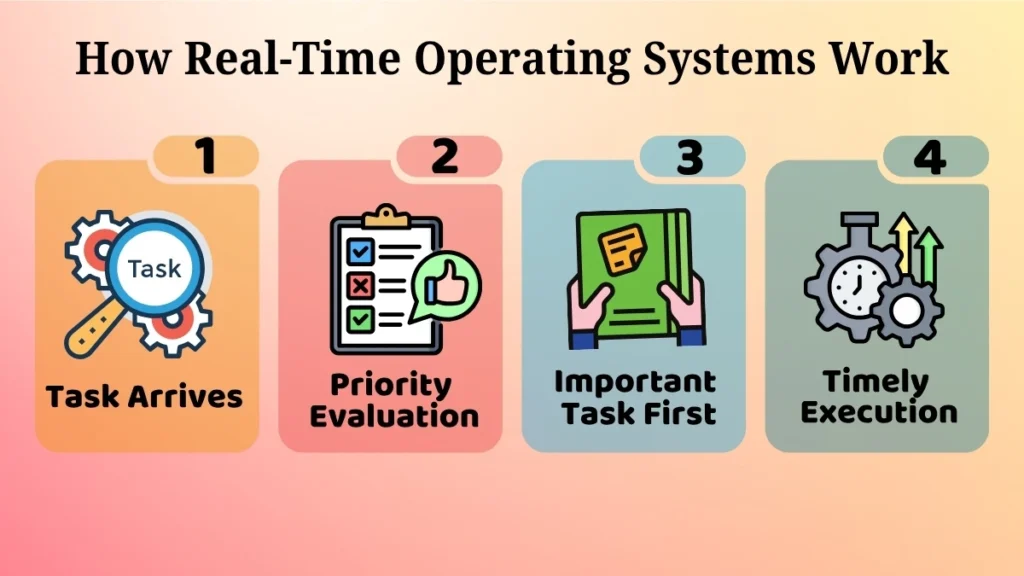
It always checks tasks and decides which ones need to be done right away.
As soon as a new task enters the system, the operating system evaluates its importance and decides when it should be processed. Tasks that are very important are done first while important tasks wait until the system is ready.
In a hospital, it is like an emergency room.
Doctors do not always treat patients in the order they come in. Someone who is critically ill receives attention right away, while patients with minor issues are usually seen later. Real-time operating systems work in a similar way by giving priority to the most important tasks.
This organized way of doing things helps the system run smoothly while making sure important things get done on time.
They are used in things around us that we do not even notice.
Common Usages of Real-Time Operating Systems
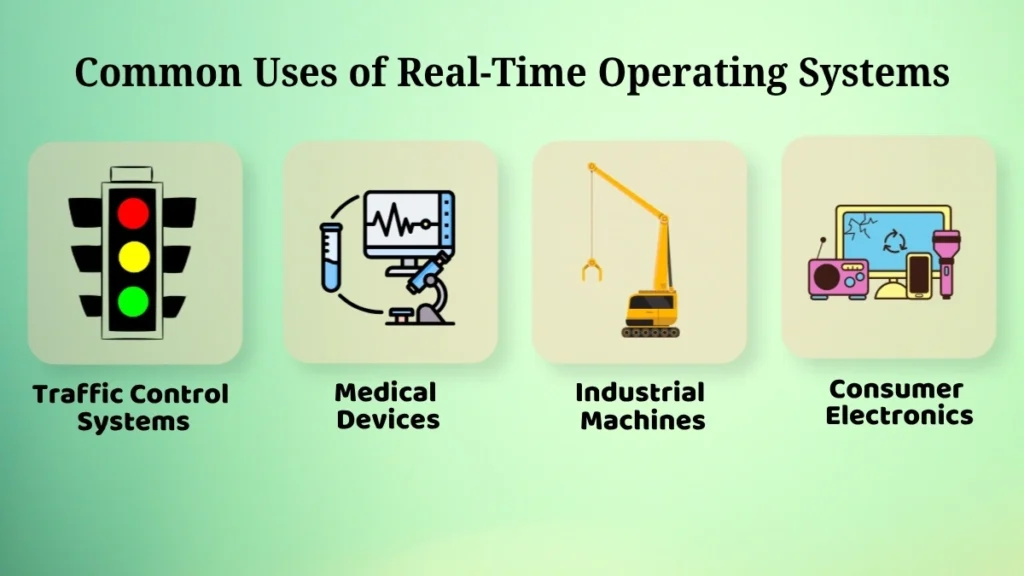
Traffic Control Systems
Traffic control systems are an example of real-time operating systems in action.
Traffic lights, pedestrian signals, and road management systems have to work at the right time.
If the signals do not change on time it can cause confusion and accidents can happen.
It helps these systems operate on time and perform their tasks properly.
Medical Devices
Many medical devices need to respond immediately when something changes.
Things, like monitors and medical pumps and heart monitoring systems and diagnostic machines use real time operating systems.
When these systems find something they have to respond right away and get it right.
This helps doctors and nurses make decisions and keep patients safe.
Industrial Machines
Factory machines are often required to complete tasks at specific times to ensure smooth production.
Robotic arms and conveyor belts and packaging systems and assembly line machinery have to do their jobs in the correct order.
Real-time operating systems help these machines work together and keep everything running smoothly.
Consumer Electronics
They are not just for factories or hospitals. Many things we use every day also use this technology.
For example smartwatches, digital cameras, fitness trackers, smart home devices and some entertainment systems use them to work smoothly. When you touch a device and it responds immediately a real-time operating system might be working behind the scenes.
Benefits of Real-Time Operating Systems
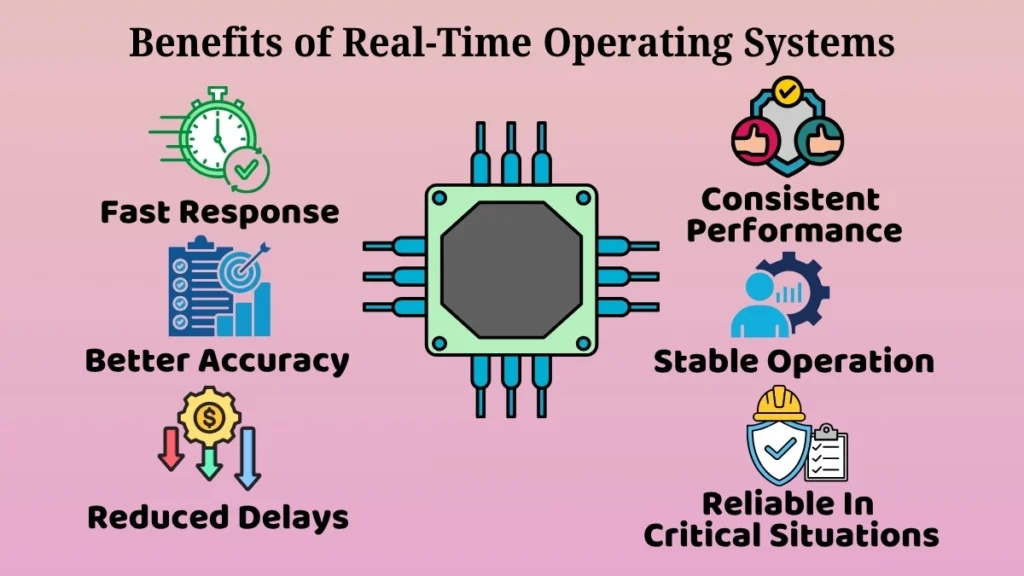
A real-time operating system has several benefits that make it great for things that need to happen on time.
- It responds fast
- It works consistently
- It does things efficiently
- It makes the system more accurate
- It helps systems perform well in critical situations
- It reduces the chance of things getting delayed
- It helps keep the system stable
These advantages make real-time operating systems perfect for things that need to be on time and work well.
Limitations of a Real-Time Operating System
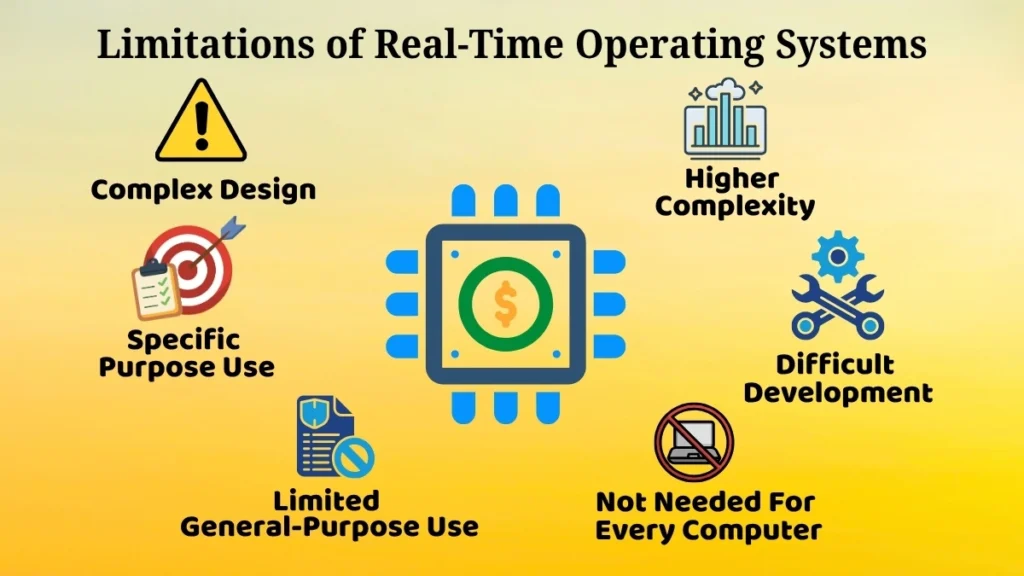
Even though real-time operating systems have a lot of benefits but they also have some drawbacks.
- They are mostly for specific purposes
- They can be hard to plan and make
- They can be complicated
- Not every computer needs this system
- They are not great for things like browsing the internet or doing office work
Because of these drawbacks they are usually only used when things need to happen fast and on time.
Real-Time Operating System vs General-Purpose Operating System
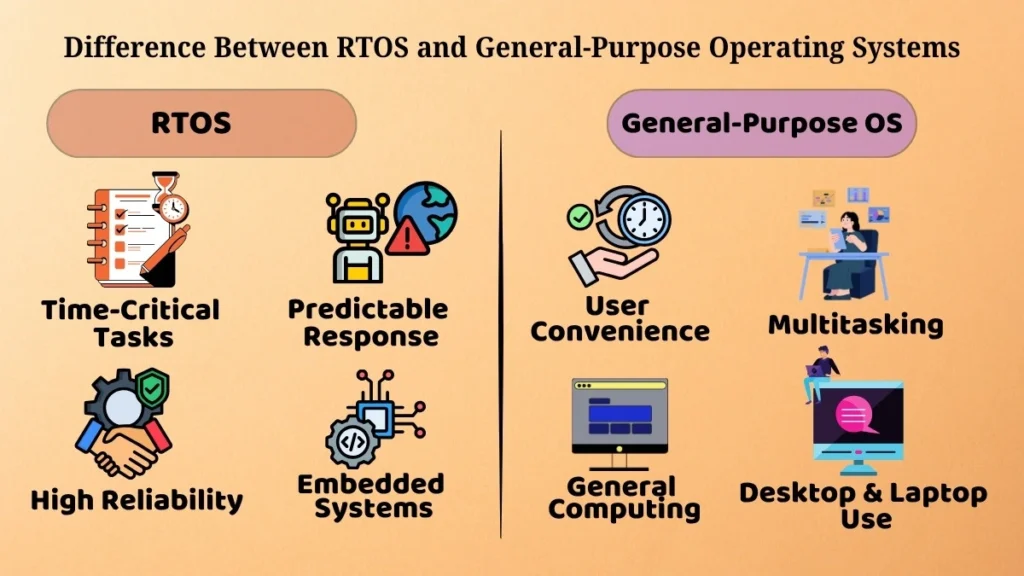
A real-time operating system and a general-purpose operating system are different.
The main goal of a real-time operating system is to get things done on time and work consistently.
A general-purpose operating system is about being flexible and easy to use and working with a lot of things.
For example, desktop computers and laptops use general-purpose operating systems because people need to use the internet, watch videos, play games, and do many things at the same time.
On the other hand things that need to work right away and reliably often use real-time operating systems.
A simple way to remember the difference is that a general-purpose operating system focuses on user convenience, while a real-time operating system focuses on completing important tasks on time.
Why Understanding RTOS Is Important for Beginners
Many beginners learn about operating systems by studying the software used on computers and mobile devices.
Learning about RTOS is really helpful because it helps you understand how technology works in different situations.
Studying it can help you to:
- Understand the kinds of operating systems
- Learn how important systems work
- Build a foundation in computer basics
- Explore systems that are built into devices and automation technologies
- Prepare for advanced studies in software and robotics and electronics
As technology gets more automated knowing about RTOS becomes even more valuable.
Conclusion
A real-time operating system (RTOS) is a type of operating system that provides fast, reliable, and predictable responses to tasks and events.
RTOS is different from operating systems that focus on making things easy for users because RTOS focuses on making sure important tasks are done on time.
It plays a crucial role in many systems, including traffic control systems and medical equipment and industrial machines and smart devices.
For beginners, understanding real-time operating systems is a step towards learning how different operating systems are designed to meet different needs.
Understanding RTOS also gives you an understanding of the technology that powers many of the important systems used in daily life and that is why learning about real-time operating systems is so important.
Pingback: Batch Operating Systems: Ultimate Guide