
Batch Operating Systems Explained for Beginners
Introduction
Operating systems are made to handle computer tasks in multiple ways. Some systems process tasks immediately when they arrive, while others are designed to handle large amounts of work. In places where people need to perform the same task repeatedly, it might take a lot of time and resources to do each activity one at a time. To fix this problem, a Batch Operating System puts tasks together and processes them as a group.
This way, people can save time, and handle their work better. Batch processing has been around for a long time, but it is still used in many areas where people need to handle a lot of data.
In this article you will learn what a Batch Operating System is, how it works, where it is used, what its benefits and drawbacks are, and how it is different from a Real-Time Operating System.
What Is a Batch Operating System?
A Batch Operating System is a type of operating system that processes tasks in groups instead of handling them one by one.
It does not do each job separately. It collects similar jobs and puts them into a group. When the group is ready the operating system does all the tasks by itself.
This works well for tasks that people do over and over and do not need to watch all the time. After people give the system the tasks it can keep doing them without waiting for instructions.
The main goal of a Batch Operating System is to make things more efficient when dealing with a lot of work.
Why Is a Batch Operating System Important?
Lots of organizations deal with thousands of records, transactions, or reports every single day. If someone does each task one by one, it just takes way too much time, and it can feel like a lot of effort.
A batch operating system is useful because it groups tasks and completes them together. That cuts down on redoing the same thing over and over, and it can help people finish their work more quickly. Batch Operating Systems are also important because they help organizations manage large workloads efficiently and support better workload management. It’s especially good for people who have to do tasks that’re basically the same again and again.
Organized Task Processing
One clear benefit of batch processing is that it maintains process organization. When tasks get grouped before processing begins, it becomes easier for the operating system to manage a large amount of work. For example, if a company has to update customer information for thousands of users, all those updates can be carried out together instead of separately.
This more structured approach improves the workflow and can lower overall complexity, too. It also makes the system behave more predictably, which is often what people want.
Efficient Resource Usage
Additionally, batch processing enables the computer to make more intelligent use of its resources. Since the system handles tasks in batches, it can keep working with fewer interruptions. That generally saves time, and it gives the computer a clearer focus on completing the workload.
As a result, processing becomes faster and more efficient, especially when dealing with tasks like updating records or processing transactions using batch processing.
How Does a Batch Operating System Work?
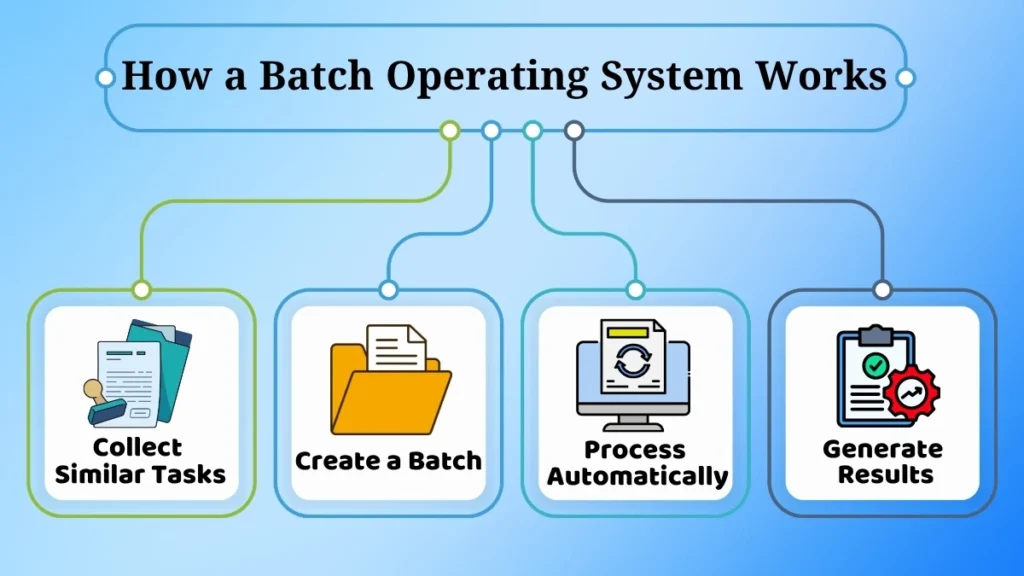
It functions somewhat like a step-by-step process. First, similar tasks are brought together into a batch. These tasks can include generating reports, updating records, processing transactions, or repeating activities like data entry.
After the batch is prepared, it gets submitted to the operating system. Then the system processes all the tasks in that batch automatically, without the user needing to be involved again and again. It’s like checking and then continuing, with less back and forth for the person.
Common Uses of Batch Operating Systems
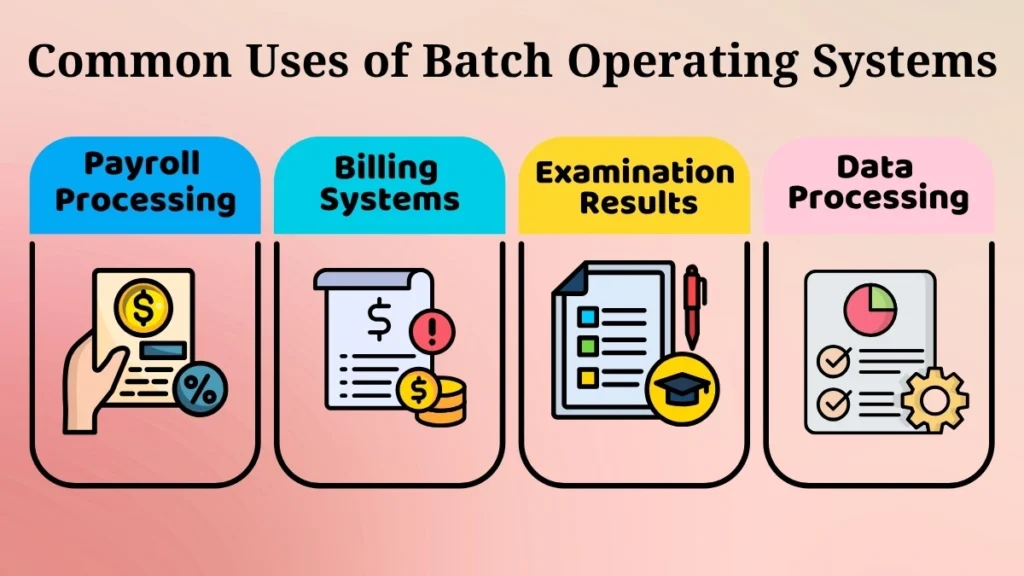
Batch Operating Systems are used in many places where repetitive tasks need to be performed for large numbers of people.
Payroll Processing
Payroll management is something that Batch Operating Systems are really good at.
Businesses are required to determine the salaries of hundreds or thousands of employees.
Instead of processing each salary individually they do all of them together in a Batch Operating System.
This way, it saves time and makes the entire payroll process much easier.
Billing Systems
Batch operating systems are used by many service providers to generate invoices for their clients.
For example, the people who give us electricity, internet and water have to make bills for a lot of customers every month.
It is much better to do all the billing than to do each one by itself.
Examination Result Processing
Schools and colleges use Batch Operating Systems when they are getting ready to give out exam results.
They can put all the student records, marks, and grades together and generate results quickly and correctly.
Data Processing Tasks
Every day organizations have to deal with a lot of data.
They have to generate reports, update databases, maintain records, and organize data.
They often use Batch Operating Systems to do these things because it helps them get a lot of work done quickly.
Batch operating systems are highly helpful for data processing tasks like this because they are excellent at managing workloads.
Batch Operating Systems make it easy to do jobs and that is why they are used so much for Data Processing Tasks.
Advantages of a Batch Operating System
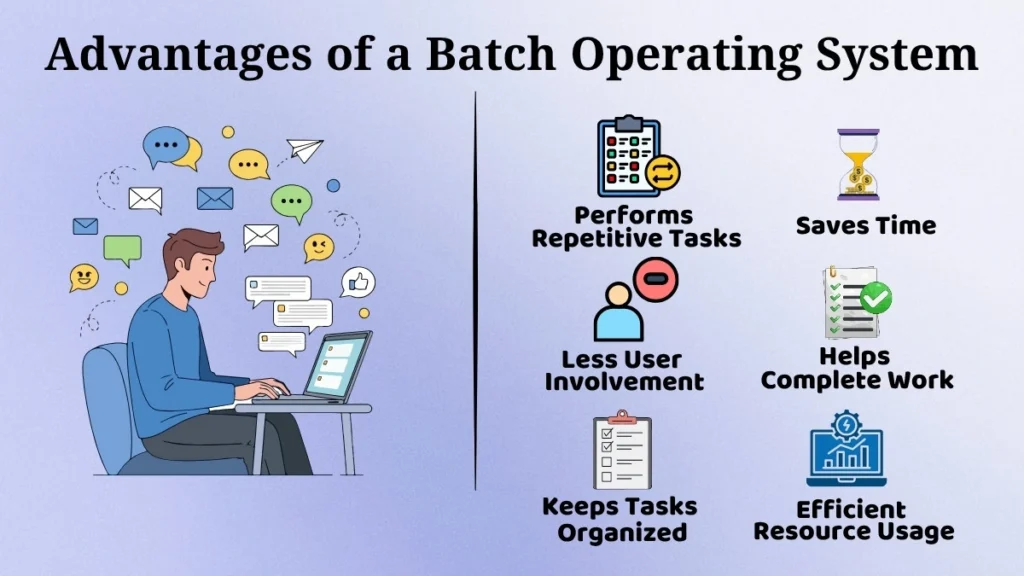
A Batch Operating System provides various benefits.
- It performs tasks that need to be completed repeatedly
- It saves a lot of time, when there is a lot of work to be done
- It does not need people to be involved much
- It helps organizations get work done
- It keeps related tasks organized
- It makes the most of the system’s resources
These good things about batch processing make it very useful for businesses and schools and banks and a lot of other organizations.
Limitations of a Batch Operating System
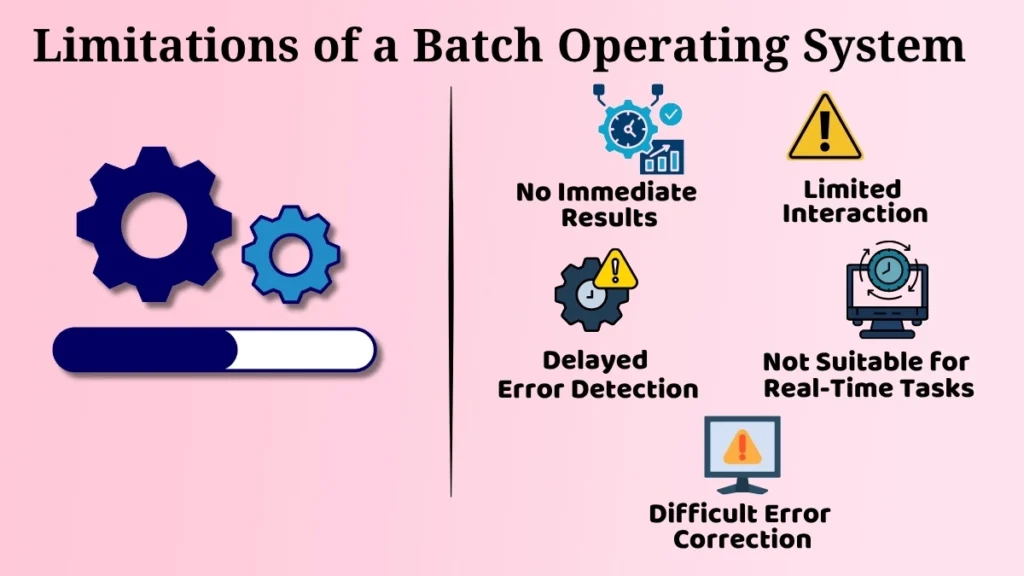
But with all the good things, batch processing has some not so good things too.
- You do not receive results immediately
- You can not do much with the system while it is working
- You might not find out about mistakes until the work is all done
- It is not good for tasks that need answers now
- It can be hard to fix mistakes when there are a lot of them in a batch
Because of these not so good things batch systems are usually used when it is not necessary to get the results right away.
Batch Operating System vs Real-Time Operating System
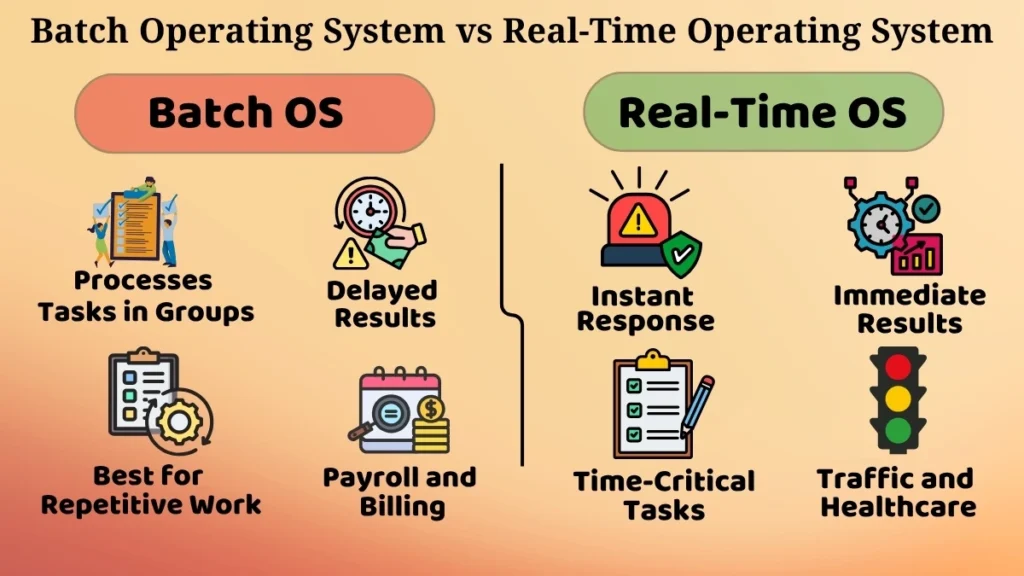
A Batch Operating System and a Real-Time Operating System are made for things.
A Batch Operating System is good at processing many tasks at the same time.
You do not usually need to receive results immediately with a Batch Operating System.
A Real-Time Operating System is different.
It is designed to respond immediately when an event occurs.
If it is slow for a little bit it can cause problems in some cases.
For example, paying employees can be done with batch processing because the results do not need to be available immediately.
On the other hand, systems that control traffic or monitor patients or run factories need to react right away and so they use Real-Time Operating Systems.
Understanding the difference, between a Batch Operating System and a Real-Time Operating System helps people who are just starting out see why different operating systems are used in situations.
Why Understanding Batch Operating Systems Is Important for Beginners
Learning about Batch Operating Systems is really helpful for beginners because it shows them how computers can handle a large amount of work at the same time.
Batch Operating Systems help beginners understand how computers manage workloads efficiently.
It is good for you to learn about Batch Operating Systems because you get to:
- Learn about Batch Operating Systems, which are an important type of operating system
- Understand how Batch Operating Systems automate tasks that you have to do over and over
- Learn about business and organizational computing with Batch Operating Systems
- Know more about the basics of computers with Batch Operating Systems
- See how Batch Operating Systems make computers work efficiently
This knowledge of Batch Operating Systems also makes it easier for you to learn about other operating system concepts later on.
Conclusion
A Batch Operating System is a type of operating system that does tasks in groups instead of doing them one by one.
By putting jobs into batches, a Batch Operating System improves efficiency. Users do not have to be involved all the time.
They are used for things like payroll processing, billing systems, examination results processing, and handling large amounts of data.
The fact that they can organize and automate work that you have to do over and over makes them very useful in organizations.
For beginners, learning about Batch Operating Systems is an important step in understanding how different operating systems work and how they help solve real-world computing problems.