
Linux Operating System Explained for Beginners
Introduction
Although many beginners are familiar with the term Linux, they instantly lack a clear knowledge of what it actually is. Linux may first seem unusual, in comparison to certain other operating systems, particularly to those who are just starting to learn how to use computers.
When learning about computers, people usually concentrate on operating systems since these make using the computer possible. Just like other operating systems, Linux helps users work with both hardware and software. However, Linux has special features that set it unique and well-liked by many users.
Linux is pretty cool because it’s free and open-source. So you don’t need to pay for it or any special license. Additionally, people can see exactly how the whole system operates. Because of this, Linux has really grown as a key platform for learning and technology growth in education.
Linux is known for being flexible and reliable. Students, developers, technology experts, and many other people use it worldwide. Sure, beginners may think it’s a bit different at first. Still, lots of people like it since it offers a great learning experience.
The goal of this article is to explain Linux in easy understandable language so that beginners can understand what it is, why people use it, its main characteristics, and where it is commonly used.
What Is Linux Operating System?
Linux is an operating system that lets computers perform their functions.
It serves as a link between the hardware and the users. When you open an app or save a file, Linux helps your computer understand what to perform with those commands. So, whenever you work on something, it’s Linux helping things along behind the scenes.
Just like other operating systems, Linux handles key computer things too. It manages files, folders, memory, apps, and connected devices. Also, it ensures that every part of the computer works well together.
For instance, when you open a web browser, Linux loads it up and displays it on your screen. Similarly, Linux manages the saving processes and maintains order when you save a file. So, it manages both opening applications and storing files efficiently.
Without Linux, computers would not have an organised interface for users. If the hardware is all set up, still we could not easily perform tasks on the machine. So, the operating system is key for a user-friendly computing experience.
This is the reason why Linux is seen as a crucial part of a computer system.
Why Do People Use Linux?
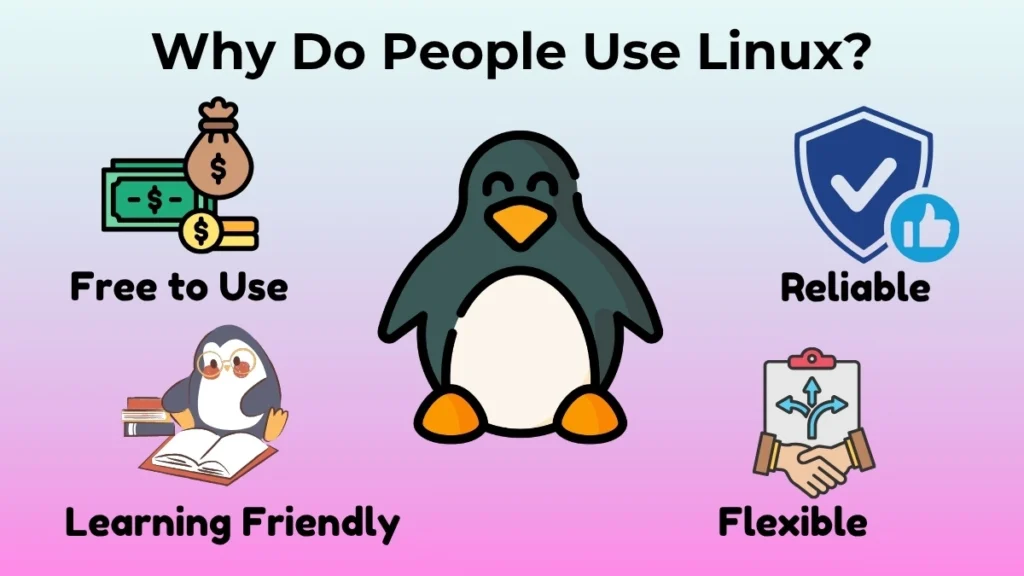
There are various reasons why people prefer Linux.
One of the main reasons people prefer Linux is that it is free. Unlike other systems needing paid-for-license, you don’t pay to use Linux. This makes it super attractive for students, learners, schools, and organisation, since no one’s excluded because of costs.
Linux is famous for being super stable and reliable. It handles tasks efficiently and keeps running smoothly for days on end. People admire that it manages different workloads well, without many issues.
Linux is popular because it’s great for learning. Students and technology enthusiasts prefer using it to understand computers better. It helps them understand how operating systems work, too. As a result, using it teaches people more about computers.
It is super flexible too. You can use it to learn, develop software, or for education and various professional tasks. This versatility is why it appeals to so many different kinds of users.
These benefits have helped Linux become one of the most respected operating systems in the technology world.
Basic Features of Linux OS
Linux has various helpful features that make it easier for users to efficiently manage their devices.
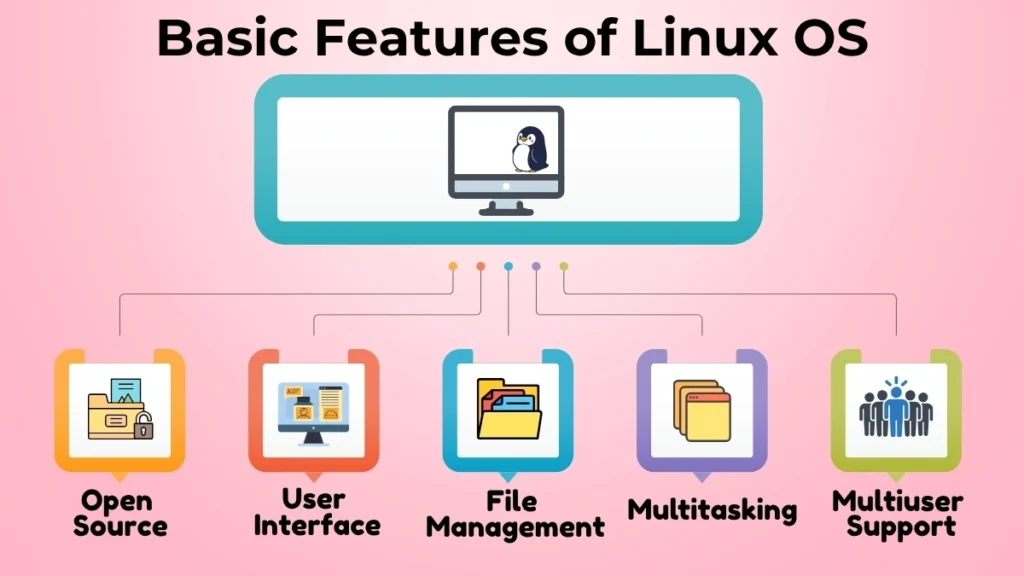
Open-Source Nature
Linux’s open-source nature is one of its main features. Basically, that means anyone can use it, look at its code, and learn from it. It’s perfect for seeing how an operating system operates and analyze different aspects of operating system technology.
The openness of Linux really inspires learning and experimentation. Linux is a popular choice among students because it offers an opportunity to learn about computers in a practical way.
Additionally, Linux users have a strong community behind them. From all over the world, people exchange knowledge, offer advice, and help sort out issues. This community is especially helpful for beginners, making the whole learning journey easier.
User Interface (Simple Overview)
Linux provides several ways for users to interact with computers. Some peoples prefer a graphical interface with icons, menus, and windows – much like other operating systems.
This is usually simpler for beginners since they can easily navigate and click their way through tasks.
To interacting with the system, other users may choose text-based methods. Now, beginners shouldn’t worry too much about that right away. Still, it’s useful to know Linux lets you choose how you want to work with your system.
The key point is that Linux lets various users select the approach that best fits their requirements and tastes.
File and Folder Structure
Linux helps users keep files and folders organized. Documents, images, videos, and other files can be neatly stored in specific places for easy access. This makes managing information way easier and avoids confusion.
For instance, a student could put study materials in different folders, and a professional might arrange files by project or task.
Also, Linux helps keeps things tidy and supports a secure space for saving information. When you stay on top of file management, finding data when you need it is super simple.
Multitasking and Multiuser Support
Linux allows multitasking, which means you can browse the web, listen to music, and work on docs all at once. The operating system handles everything smoothly, keeping your functions running without lag.
Also, Linux allows multiple users to be on the system at the same time. This way, different people can use the computer and not mess up each other’s work.
In schools or offices where lots of people share computers, this comes in really convenient. They can log in, perform their functions, and not get in one another’s way.
So whether you are individual or part of a team, Linux works great for everyone.
Where Is Linux Commonly Used?
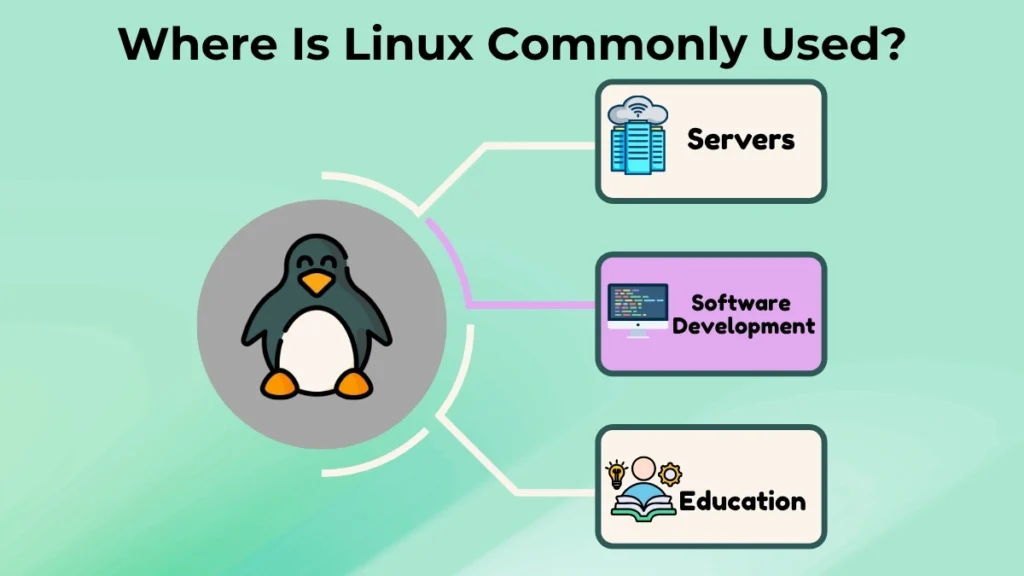
The reason why Linux can be used in many different places is due to the characteristics of flexibility and reliability.
The first place where Linux is used is server computers that run websites and other applications and services. The main advantage of Linux is the stability of the performance and effective work with resources.
Another group that can benefit from using Linux is developers and people that work with technologies. Many developers use Linux in order to study and develop new programs and solutions.
Finally, educational organizations can teach students about the work of an OS through Linux because Linux gives students a chance to see how operating systems work and get more practical knowledge.
Everyday Devices Using Linux
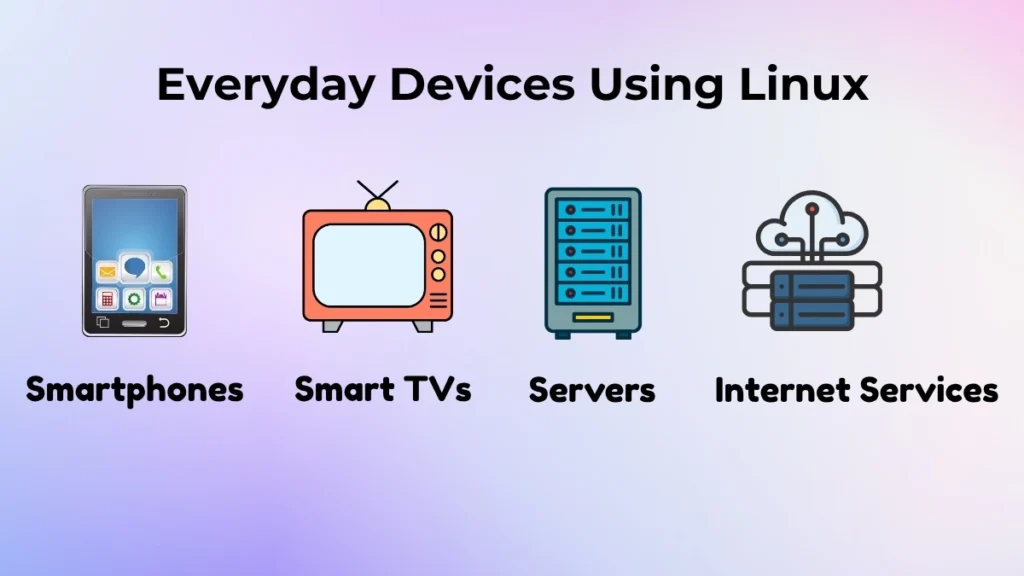
Many individuals fail to appreciate the fact that there are several technological settings in which Linux is employed other than desktops.
Some of these include educational institutions, technology devices, and other computing platforms where reliability is needed. In most of these situations, the user does not have any idea whatsoever that he or she is utilizing some kind of technology based on Linux.
Linux is also behind the scenes in various digital systems and processes that we use daily for various purposes through the internet and other technologies.
These few points illustrate how significant Linux has become in the world of computing and how it contributes to various digital transactions in our day-to-day lives.
Advantages of Using Linux (Beginner View)
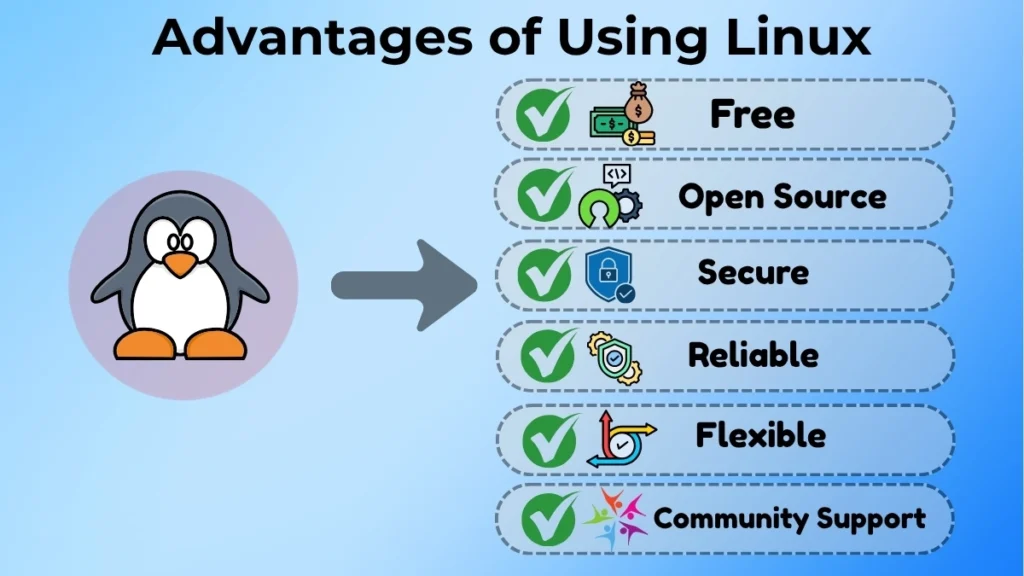
Linux provides many benefits that make it appealing for beginners.
- Open Source and free
- Reliable performance
- Computing is safe on Linux
- Helps in understanding computer basics
- Large user community backing
- Versatile as per user requirements
The above benefits make Linux an ideal choice for people interested in exploring operating systems and gaining computer knowledge.
Is Linux Good for Beginners?
For the beginner users, Linux is not only user friendly but can also help learn about technology and computers.
Initially, Linux can seem unusual for the new users since the environment and characteristics of this system may differ from the ones which users know. But after frequent practice, users become more familiar with the system.
One of the key advantages of using Linux is that it allows users to develop skills related to this system.
In particular, using Linux contributes to learning about the computer and technology because users get skills related to working with operating systems, file systems, etc.
In other words, Linux is a great source for developing the skills of working with the computer and technology.
Moreover, Linux can help increase self-confidence.
Conclusion
Linux is an efficient and versatile operating system that is used in a variety of environments all over the globe.
It enables a computer to do work efficiently, thus offering the user an effective method of controlling their applications, files, folders, and other resources within the system. Similar to any other operating system, Linux works as a medium between the user and the underlying computer hardware.
Attributes like being open-source, multitasking, multiusers, efficient file management, and supportive communities are among the reasons why Linux serves as a valuable operating system for both learning and real-world application purposes.
For beginners, learning about Linux becomes an essential milestone towards increasing their understanding of computers and exploring various technological fields. Through persistence and curiosity, Linux can serve as a great addition to one’s computer experience.