
Embedded Computers and Smart Devices Explained for Beginners
Introduction
In today’s modern era, smart devices and tools have become a necessity for our daily lives. From smartphones to smart TVs, washing machines and cars, many devices in our surroundings work automatically and efficiently, without even getting noticed.
Many people think that computers can only exist in the form of laptops or desktops. If you are also one of them, you would be surprised to know that there are small computers hidden inside many everyday devices. These small computers are very important for controlling specific functions and helping the device to work smoothly.
These small systems are not always visible or noticeable, but they play an important role in modern technology. Many devices that we use daily would not function properly in their absence.
The purpose of this article is to explain embedded computers and smart devices in a simple and understandable language. It will help beginners to get a better understanding of how hidden computers operate inside common devices and make our lives easier.
What Is an Embedded Computer?
An embedded computer refers to a small computer which is inside another device. It is usually designed for performing a specific task.
Unlike general computers, which can perform multiple types of tasks, an embedded computer focuses only on one particular function.
For instance, the hidden system inside a washing machine is designed to control washing time, water level, and spinning cycles. This built-in system is an embedded computer.
An embedded computer is designed to automatically work in the background. It does not require full user control like a normal computer system.
Another major point is that users usually cannot interact directly with an embedded computer. Instead, they tend to interact with the device while the embedded system manages the internal operations.
Because of such design, embedded computers are easy to use, efficient, reliable and effective for specific tasks.
What Are Smart Devices?
As you already know, a smart device is an electronic system which uses a built-in computer system to perform tasks intelligently.
Smart devices are often connected to the internet and can be controlled using automation or remotes.
In simple terms, a smart device is a system that uses a computer inside it, in order to ensure easier and more efficient operation.
Examples of smart devices are:
-
Smartphones
-
Smart TV
-
Smart speakers
-
Smart home appliances
These devices are created to reduce human effort and provide a better user experience. They are capable of performing actions quickly. They often require minimal input from the user.
Nowadays, smart devices are becoming very common in use, because they offer multiple qualities like convenience, speed, and ease of use in daily life.
Difference Between Embedded Computers and General Computers
Understanding the difference between both embedded computers and general computers will help in avoiding confusion.
Purpose
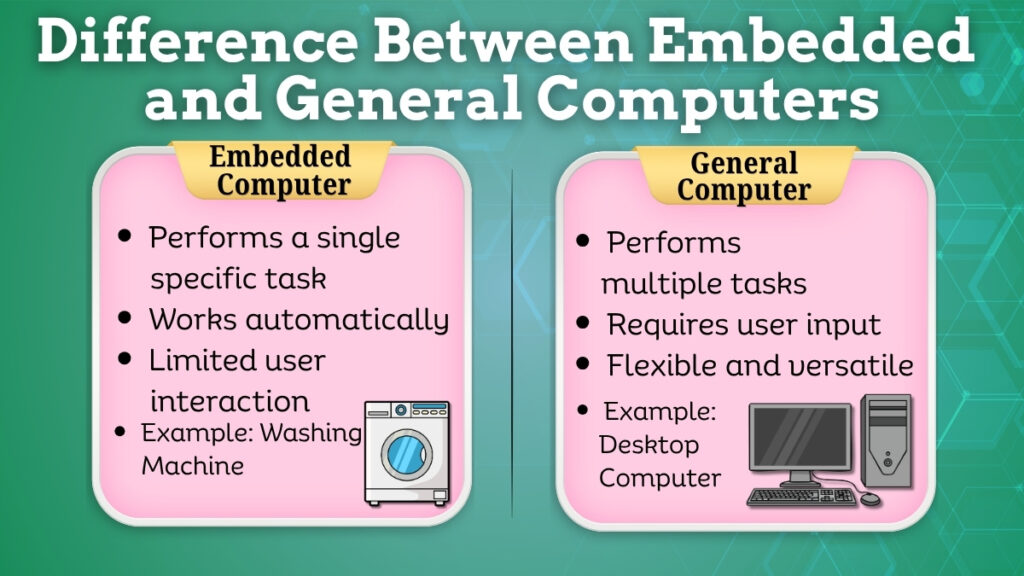
On one hand, a general computer is created and designed to perform multiple tasks such as writing documents, browsing the internet, playing games, and managing data/records.
On the other hand, an embedded computer is designed for performing any single specific task. It controls one particular function inside a device.
User Interaction
General computers require user interaction actively. It works based on the input like users typing, clicking, and controlling various operations.
While, embedded computers have limited or no interaction with the user. They usually work automatically once settings are defined. They can operate their specific tasks in the background without constant supervision.
Because of this difference, embedded computers are much more focused than general ones. While, general computers are much more flexible than embedded ones.
Real Life Examples of embedded computers
Embedded computers are present everywhere in our surroundings. They are placed inside the devices which we use daily.
Home Appliances
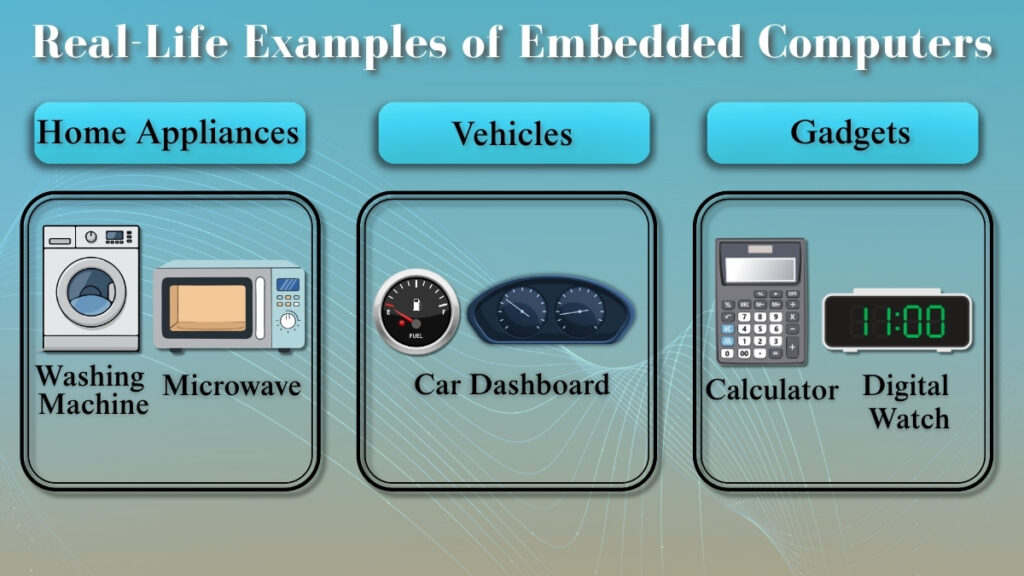
Home appliances that use embedded computers are:
-
Washing machines
-
Microwave ovens
-
Smart TVs
All these devices perform tasks automatically once instructions are selected.
Let us observe brief descriptions of these examples, a microwave oven can control cooking time and temperature automatically. In the same way, a washing machine can complete washing cycles without requiring continuous input.
These hidden and unnoticeable systems inside home appliances make them easier to use and save time.
Vehicles
Modern vehicles nowadays contain embedded computers, that are used to manage various functions such as:
-
Dashboard display
-
Warning indicators
-
Sensors
These systems help drivers to monitor speed, check fuel levels, and other important information. They are also used for improving safety by alerting drivers about possible issues.
Gadgets
Small gadgets that are used in daily life also use embedded computers such as:
-
Digital watches
-
Calculators
These devices are used for performing specific tasks quickly and accurately. They are simple in nature, but effective examples of how embedded systems are used in everyday tools.
Examples of Smart Devices
Smart devices are a combination of embedded computers with advanced features.
Some examples are:
Smart Phones and Tablets
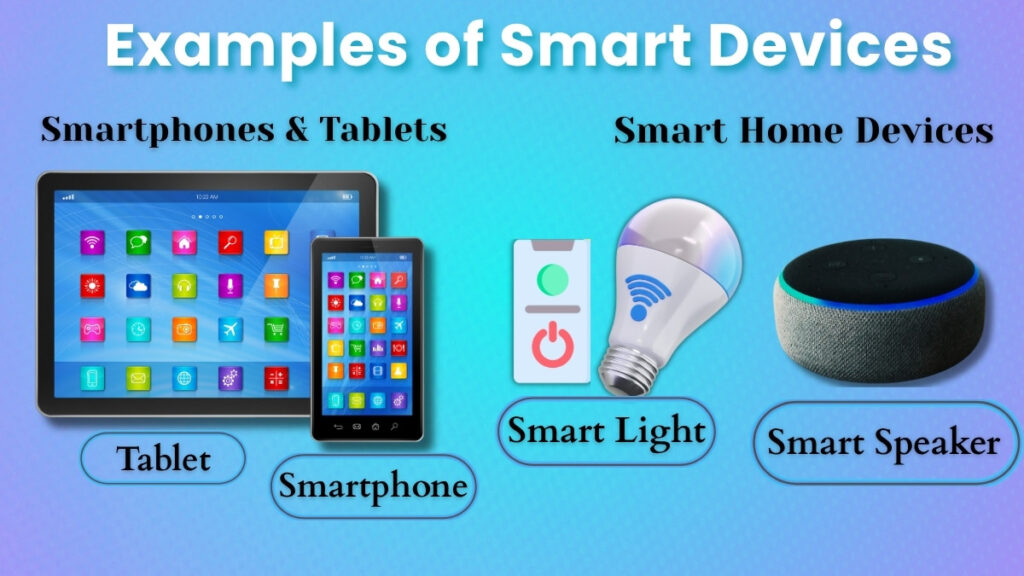
Smartphones and tablets are the most commonly used smart devices. They help users in performing multiple tasks such as:
-
Communicating with others through calls and messages
-
Using various applications
-
Accessing important information through the internet
-
Watching fun videos and listening to music
These devices are designed with built-in computer systems to manage multiple activities efficiently.
In today’s world, they are becoming essential tools for both small and large tasks.
Smart Home Devices
Few common examples of smart home devices are:
-
Smart lights
-
Smart speakers
-
Smart security systems
These devices can be easily controlled using remotes and some of them are designed to respond automatically to commands.
Home management becomes easier and much more convenient by using them.
For example, lights can be turned on or off easily using a remote, and speakers can play music based on simple verbal instruction.
How Embedded Computers Make Life Easier
Embedded computers work automatically and reduce manual effort. For example:
-
Washing machines complete washing cycles automatically without any supervision.
-
Cars display important information instantly.
-
Smart TVs allow easy access to many types of digital content.
Because of embedded systems, users do not need to control every small function manually. This automation saves time and simplifies people’s routine tasks.
Another major advantage of embedded systems is consistency. They perform tasks with the same pattern every time which eventually reduces the chance of error. They also help in improving convenience by making devices easier to operate for users of all age groups.
Importance of Embedded Computers in Modern Life
Embedded computers play a very important role in modern technology usage.
They are available literally everywhere such as homes, offices, vehicles, and even in public services.
Many smart devices would not function properly if embedded systems are not present.
They contribute to the development of technology and make devices more intelligent and user-friendly.
With the advancement of technology, embedded computers are becoming more and more common in daily life.
Understanding their importance will help beginners to see how technology supports daily activities.
Advantages of Embedded Computers
The main advantages of embedded computers are listed below:
-
Fast response to specific tasks
-
Reliable performance
-
Energy efficiency
-
Automatic operation
-
Reduced human effort
-
Less user involvement
Because of specific focus, they work efficiently and consistently.
Limitations of Embedded Computers
They are really useful, but they still have certain limitations:
-
They are designed for a single specific task
-
Limited user control
-
Cannot perform multiple unrelated functions
-
Difficult to modify for new purposes
These limitations describe that embedded systems are more task focused rather than general purpose.
They are not suitable for complex or flexible tasks like general computers.
Conclusion
Embedded computers are small in size, built-in systems, that control specific tasks inside devices.
They are not the same as general computers, as they are designed just for a single purpose and work automatically in the background.
Embedded computers are often used in smart devices for performing tasks efficiently and conveniently.
These systems make devices work faster, easier to use, and much more reliable in daily life.
Understanding embedded computers will help beginners to realize how modern devices tend to function behind the scenes. It will also build a clear foundation for learning more about computer fundamentals.
These small hidden computers play a vital role in making our daily life easier, more efficient, and more convenient.